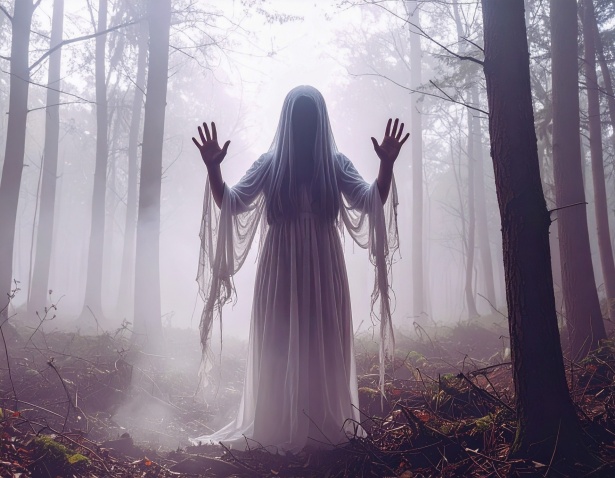
Across neighborhoods from Mexico to Texas, stories still pass quietly between families about La Llorona, the Weeping Woman said to wander riverbanks at night crying for her lost children. Older relatives tell the tale as a warning, friends repeat it after hearing strange sounds near the water, and online posts keep the mystery alive. Some people treat the story as folklore, but others insist something real is being hidden.
The theory claims sightings of a white-clothed woman and reports of eerie crying are dismissed too quickly. People say police chalk them up to wildlife, wind, or imagination, and that officials avoid taking them seriously to prevent panic. Videos of foggy riverbanks and distant wailing circulate online, convincing some that the legend is more than a story passed down through generations.
There is no evidence that a ghostly woman walks the rivers. Natives in mexico explain that La Llorona grew out of cultural storytelling meant to warn children about dangerous water and to reflect grief and regret in human life. Psychologists point out that fear and darkness make ordinary sounds feel supernatural. Still, belief persists because the legend connects to real places, real tragedies, and real memories.
What makes the story powerful is not proof, but emotion. Every town has rivers where drownings have happened, nights when the wind sounds like crying, and people who would rather believe in something haunting than accept random loss. La Llorona survives because she lives in culture, not evidence, carried forward by fear, curiosity, and the need to explain what cannot be easily understood.