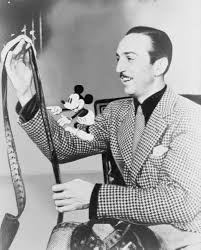
Walter Elias Disney, better known as Walt Disney, was rumored to be frozen after death using a technique called cryonic preservation. This method of preserving a body involves freezing it in liquid nitrogen vapor, then storing it for the foreseeable future. Theories speculated that Disney planned to be frozen until the world’s technology advanced enough to bring him back to life.
This theory is wrong and discredited by reliable and credible sources. For example, in 1972, Disney’s daughter, Diane Disney-Miller, wrote, “There is absolutely no truth that my father, Walt Disney, wished to be frozen.” Disney-Miller later writes she doubted her father had ever heard of cryonic preservation.
Along with Disney-Miller, cryonic preservation wasn’t known until it was documented one month after Disney’s death. This was the first case of a cryonic preservation that preserved psychologist Dr. James Bedford, under the care of Alcor Life Extension Foundation, a non-profit organization leading the charge in cryonic preservation.
Dr. James Bedford died on January 12, 1967, and was preserved the same day. He was the first person to be preserved, so it doesn’t make sense that Disney could be preserved because he died in 1966. This time difference discredits the Disney death rumor.
The Disney theory spread and gained publicity rapidly; however, no one knows where the theory originated. A factor in creating the rumor was the publication of The Prospect of Immortality in 1964 by Robert Ettinger. With Disney’s passing coming a couple of years later, the possibility of him freezing himself for the chance of a longer life seemed possible.
Another source of this rumor was Leonard Mosley’s biography, Disney’s World, published in 1986. Mosley claimed Disney was fascinated by cryonic preservation while his health deteriorated. This wasn’t a far-off assumption, as Disney was known for his love of science fiction. He created EPCOT, or Experimental Prototype Community of Tomorrow, based on the premise of demonstrating how Americans would live, work, and survive in the future.
Mosley was discredited by the fact that Disney died weeks after being diagnosed with lung cancer. This left little time for him to be researching and thinking about advanced technology, not yet proven to work, to keep his body frozen until he could come back alive. Disney had other affairs to manage instead of worrying about cryonic preservation. He had his company, family, and projects. He wouldn’t have had time to think about freezing himself.
A second biography, Walt Disney: Hollywood’s Dark Prince, published in 1993 by Marc Elliot, brought more speculation and claims about Disney’s fascination with preserving his body. The book also claimed that Disney was obsessed with death, but Elliot did not name any sources to back up his claims. Later, his claims were discredited by Disney’s family and Disney authorities.
Magazines and tabloids were other sources of this rumor. A reporter for the tabloid newspaper, The National Spotlight, claimed that he snuck into the St. Joseph’s Hospital in Burbank, where Disney was treated for his lung cancer, which was directly across the street from Disney studios. The reporter allegedly disguised himself as an orderly, broke into a storage room, and found the deceased Disney suspended in a cryogenic metal cylinder.
The rumor of a frozen Disney was accompanied by the theories of where his resting place lay. Some claim that Disney was placed under Cinderella’s Castle in Disneyland, California. Others claim that he was hidden in Pirates of the Caribbean inside the same park. Both claims are false. Disney was not hidden inside an attraction in Disneyland. He was cremated two days after his death.
Disney wanted to be cremated and did not want a funeral. He was not fond of them. After his cremation, his ashes were placed in the Forest Lawn Cemetery of Glendale, California, during a private service attended by his family only. Today, there is a marked burial plot in honor of Walt Disney, on the left of the Freedom Mausoleum entrance.
From credible sources, such as his daughter, to people from his company, to biographies trying to prove this point without reliable sources to back up their claims, the Walt Disney rumor that he was frozen after death is not true. It would have been nice to think that the great imaginary and animator could come alive again, but sadly, that will never happen.