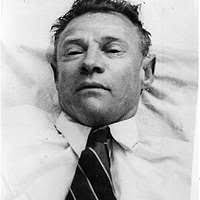
The Somerton Man was an unidentified man washed up on the beach in Adelaide, South Australia. He was found with a note in his pocket saying “it’s over,” and the killer is still unknown.
“My first thoughts when hearing about how he was found were that he had taken his own life,” freshman Chloe Cuenco said.
On December 1, 1946, an unidentified man washed up on shore at the Somerton Park beach in South Australia. At 6:30 a.m., police received a report of a dead man found cross-legged, sitting up against a wall on his back with a cigarette stuffed in his coat collar. Multiple witnesses from the night before had stated that they saw him move limply, and many thought he was drunk or asleep, also noting he was seen changing positions throughout the night. Another witness claimed they had seen a man carry a body on their shoulders late that night. The police believed he had committed suicide due to his appearance and lack of evidence at the scene.
“It’s strange how he was positioned; almost like someone did kill him and decided to set up his body that way,” freshman Avery Grace said.
An autopsy was performed on the body, and the results came up to be nothing abnormal, but poison was a consideration. The result was inconclusive, with police still unsure of the cause of death. An inquest was later performed, and the person was found to have clean clothes and shoes, unlikely for someone who was out and about all day. He was also found to have no evidence of vomiting, a usual reaction to poison. This supported the idea that he had been placed in Somerton Park after he had died.
“Someone definitely killed him if he was put into brand new clothes,” freshman Aiza Habib said.
After his recent autopsy, a note was found and sewn into the pocket of his pants. The rolled up paper said, Tamám Shud, a Persian saying meaning, “it is finished.” The text was found to belong on the last page of the book, The Rubaiyat of Omar Khayyam. Reports of the book being found vary, but popular theories include the book being found a couple of weeks after the body was found. Other reports said it was found right after he was, or was found before he died. Some other theories found letters inscribed on a page in the book, spelling out the letters W RGOABABD M LIAOI WTBIMPANETP x MLIABO AIAQCITTMTSAMSTGAB. It was believed this was a code, with professionals and amateurs attempting to decode, but they were unsuccessful. Another theory suggested that a phone number belonged to Jessica Thomson, a woman who had paid a visit from an unidentified man a few months prior.
“I think that the code theory is right and nobody has solved it yet,” freshman Riley Gilbert said.
It was widely known that this man had no identity, up until 2022, when an identity was found by Professor Derek Abbott and genealogist Colleen Fitzpatrick. The “Somerton Man” was found to be Charles Webber. Considering his struggles with his wife, police suspected the most likely cause of death was suicide. The cause or potential killer of Charles was never uncovered, leaving this to be one of the strangest cold cases in Australia.